
WRIGHT-PATTERSON AIR FORCE BASE, Ohio -- To ensure the safety of future space explorers, the Air Force Research Laboratory’s 711th Human Performance Wing is seeking active-duty military volunteers for a collaborative study with NASA to evaluate the impact forces astronauts could experience while standing during a lunar landing.
The Wing’s Biodynamics team needs 10 to 12 active-duty men and women for impact acceleration testing on the vertical deceleration tower. Testing will occur from August to September 2026, and the data collected could help establish injury risk curves for future lunar landers that will support NASA’s Artemis missions.
"This collaboration is a testament to the Wing's unique role in optimizing and protecting humans in flight and spaceflight,” said Col. Dale Harrell, 711 HPW commander. "By volunteering, our Airmen and Guardians aren't just supporting a study, they are actively writing the next chapter of human space exploration."
According to official NASA timelines, the agency is targeting the first crewed lunar landing of the Artemis program for 2028.
“Understanding occupant impact responses while standing during a lunar landing and making sure new lunar landers are safe for astronauts, is critical,” said Ronald Richardson, a research biomedical engineer with the 711 HPW’s Biomedical Impact of Flight Branch.
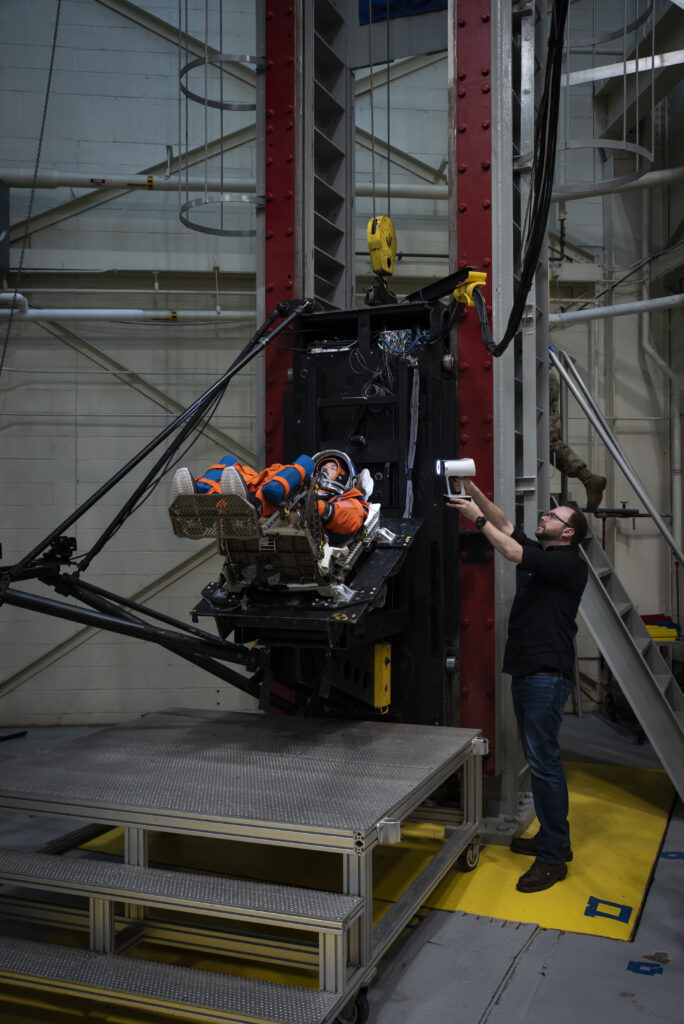
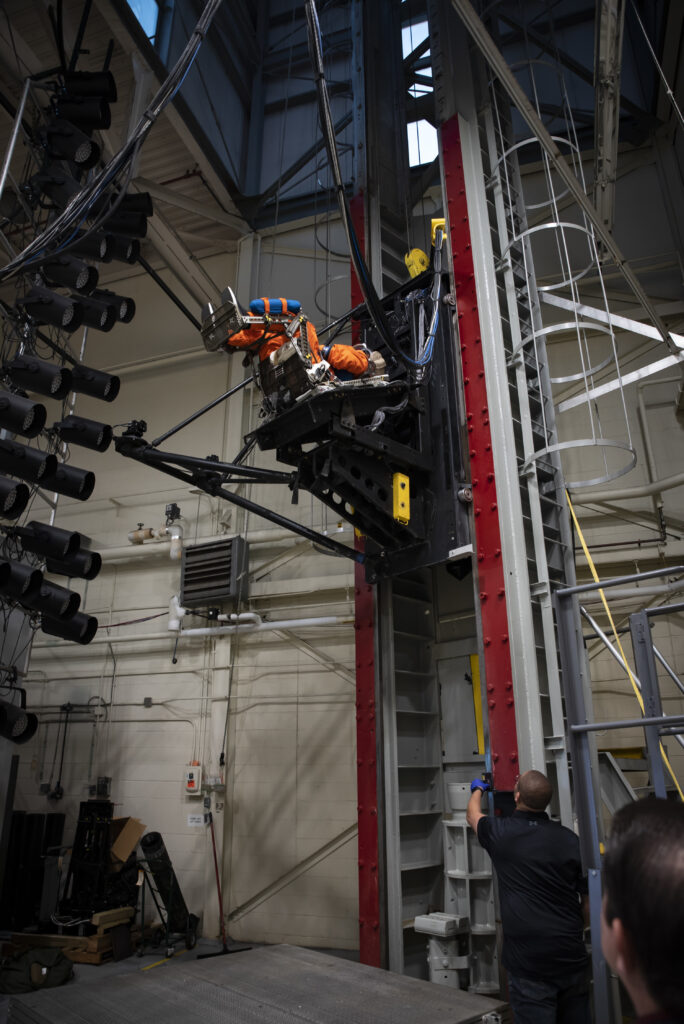
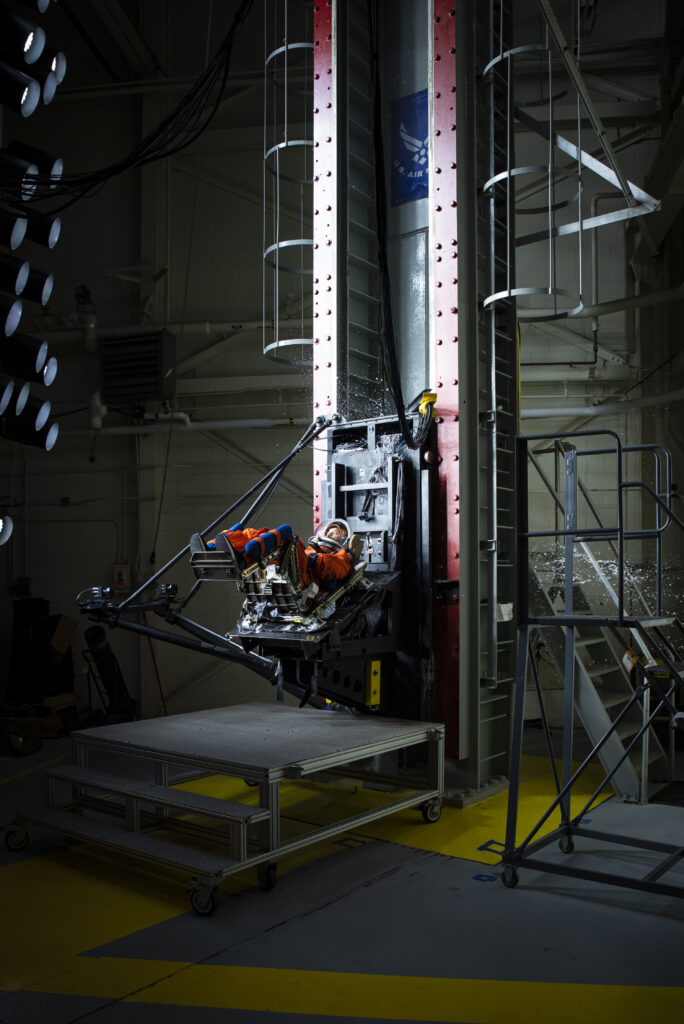
Since no validated research exists on the physical forces astronauts experience when standing during a lunar touchdown, AFRL is utilizing its vertical deceleration tower, a 50-foot drop tower, to simulate the lunar landing and bridge this data gap.
Volunteers will experience drops at two and four times the force of gravity (2 g’s and 4 g’s) to simulate the landing profile. AFRL researchers will use accelerometers, force plates and participant-worn inertial measurement units to collect comprehensive biomechanical and motion-capture data.
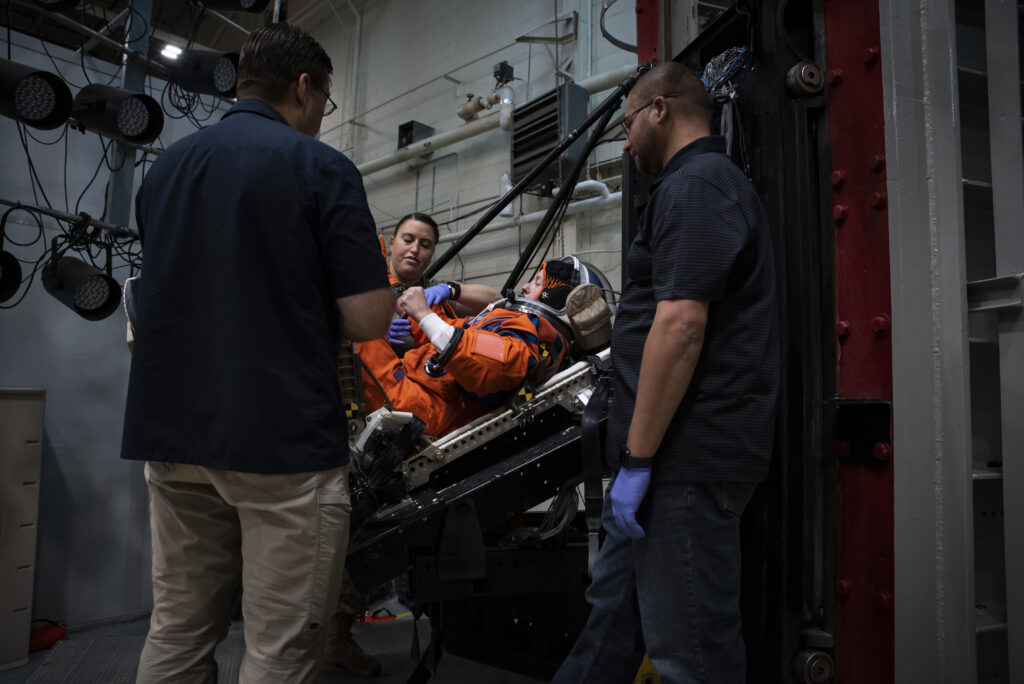
Two-thirds of the tests will be completed with the subjects in standard physical training gear with a safety harness to collect baseline responses. The remaining third will be conducted with the subjects in a NASA space suit with a specialized safety harness, allowing researchers to understand the occupant responses while wearing the actual suit and harness systems that crew members will use inside the lunar lander.
While AFRL’s Biodynamics Laboratory has a long history of collaborating with NASA on human tolerance and biodynamics studies, Richardson said previous efforts focused primarily on seated configurations and supported the development of the astronaut seats used in the Orion spacecraft.
"Our lab has done a lot of research with NASA, but this study allows us to do something that no lab has done before,” Richardson said. “This study will analyze the occupant response in a standing configuration, and it will have a direct impact on the Artemis mission to put humans on the moon."
The Wing’s Biodynamics team will provide the data collected to NASA’s Human Research Program, which will use it to validate human digital twins for future landing evaluations. The findings will also help develop injury criteria to ensure astronaut safety in the design of the new landers.
While these metrics will ultimately shape the technical engineering of future spacecraft, the study offers military volunteers a unique opportunity to have a direct impact on spaceflight history.
"To do something no other subject has done is a pretty amazing opportunity," Richardson said. "In a few years, volunteers can say they tested the same gear and suit worn by the astronauts landing on the moon."
Volunteers will receive $150 in hazardous duty pay on top of their regular salary. Participation also serves as an excellent opportunity to secure a strong officer or enlisted performance review bullet.
Participant onboarding is currently in progress, and testing begins in early August. Testing takes place during normal duty hours, requiring one to two hours per day, two to three days a week, over a two-to-three-month period.
Qualified participants must:
- Be active-duty military.
- Be between the ages of 19 and 55.
- Be between 4 feet, 8.5 inches to 6 feet, 4.6 inches
in height. - Weigh between 94 and 243 pounds.
- Be able to obtain DD Form 2992 or currently on
flight status.
Exclusion Criteria:
- Duty restrictions due to a medical profile
(AF Form 469) - Currently pregnant
How to Apply: To begin the screening process, contact the study coordinators:
- Ronald Richardson: ronald.richardson.7@us.af.mil
- Staff Sgt. Hayden Burdge: hayden.burdge@us.af.mil
711 HPW RHB Human Subject Research Coordinator: 711hpw.rhb.hsrcoordinator@us.af.mil
To learn more, visit the Human Subject Research and Biodynamics Lab webpages.
About AFRL
The Air Force Research Laboratory is the Department of the Air Force’s primary scientific research and development center and one of six centers within Air Force Materiel Command. AFRL leads the discovery, development and delivery of technologies for air, space and multidomain. With a workforce spanning seven mission areas at more than 40 locations worldwide, AFRL conducts research ranging from basic science to advanced technology development. For more information, visit afresearchlab.com.
AFRL’s 711th Human Performance Wing is a unique combination of two mission units. While the Human Effectiveness Directorate is science- and technology-focused, the U.S. Air Force School of Aerospace Medicine is a center for aerospace medical learning, consultation, medical investigations and aircrew health assessments. This synergy of research and development with aerospace medical expertise helps ensure Airmen and Guardians are available, ready and performing at their peak.