
The Air Force Research Laboratory (AFRL) has five unique ionizing radiation sources. All sources are maintained and operated by the Survivable Electronics Technology group (AFRL/RJSV) at Kirtland AFB, NM. These sources allow partnering researchers from industry, government labs, and universities to study a wide spectrum of total ionizing dose and prompt dose effects. The Survivable Electronics Technology group primarily uses these sources to determine the effects of radiation on advanced microelectronics, photonics, sensors, and micro-electromechanical systems needed for Air Force, Space Force, Department of Defense, and government space and missile systems .
Services Provided
- Dosimetry; both CaF2 and Ion Chambers
- Fabricate test board and boxes for devices under test
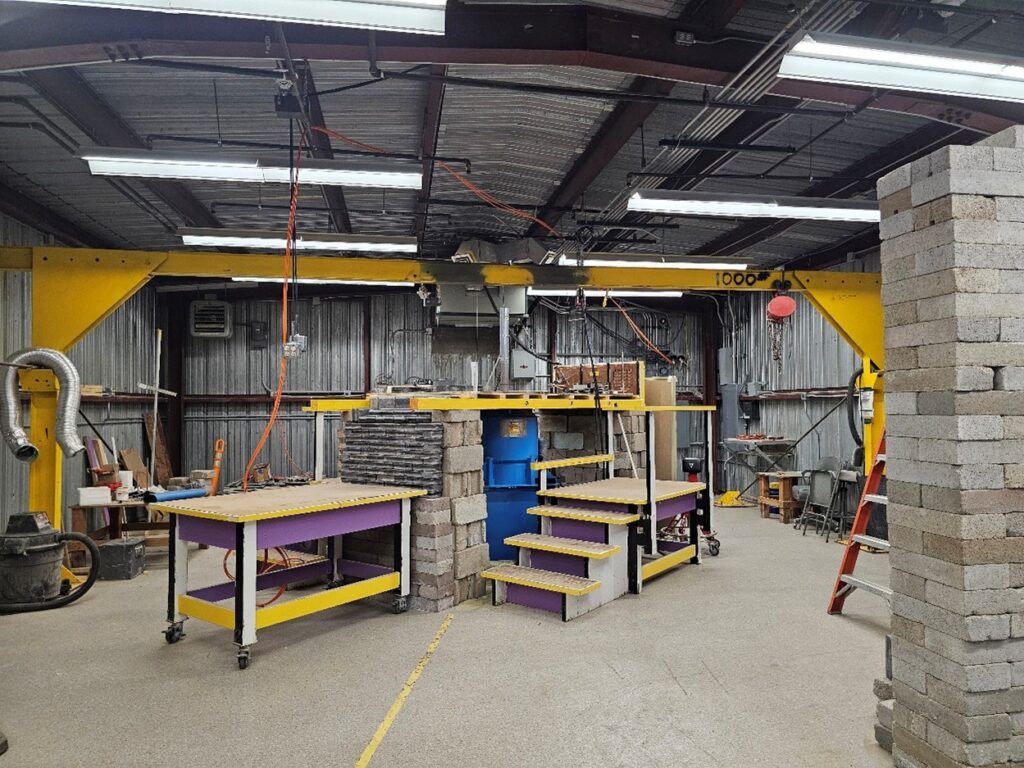
- Machine Shop access
- Supporting Equipment
- Parametric Analyzers
- B1500 w/ Switching Matrix
- Keithley 4200
- HP4142
- Mixed Signal Tester
- Operational Amplifiers
- Analog-to-Digital Converters
- Digital-to-Analog Converters
- Memories
- Oscilloscopes
- Logic Analyzers
- Clean-room
- Cyrogenic Dewars
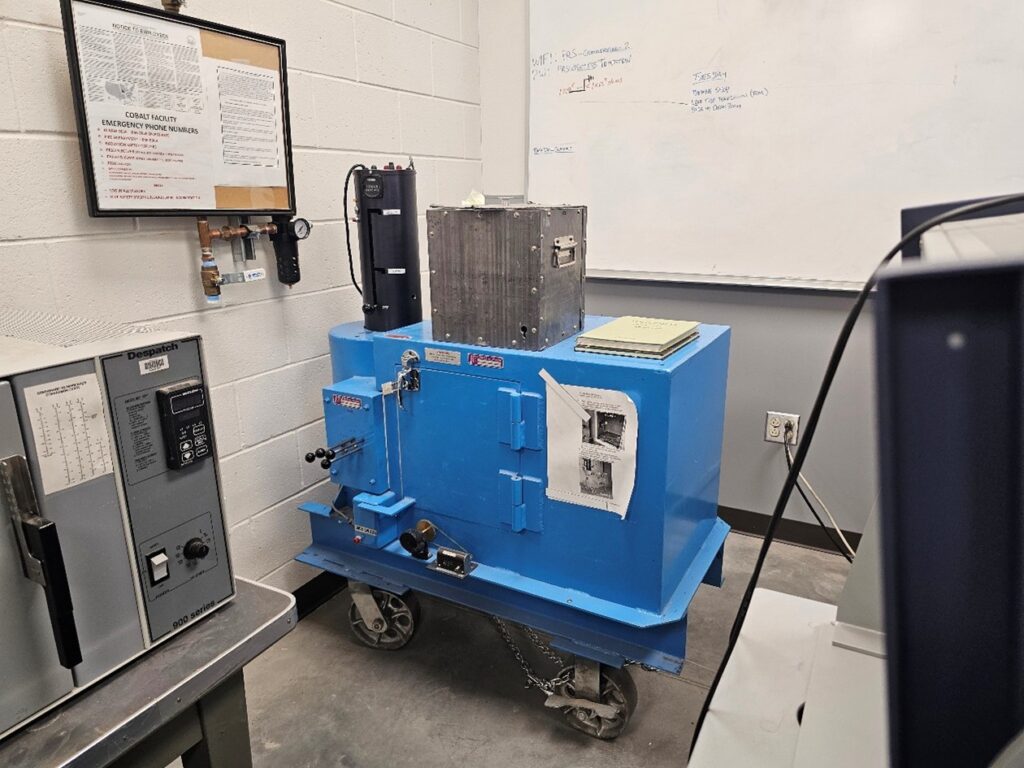
- Annealing Ovens
Gamma Radiation Sources
Co-60
The Cobalt-60 source can deliver a maximum total ionizing dose of ~20 krad (Si)/min to a minimum of <1 rad (Si)/min (which falls within ASTM 1019 specs of 300 to 50 rad(Si)/sec). Slightly higher dose rates may be attained if researchers are willing to accept that the source will appear as a line source opposed to a point source. This source produces two energy peaks at 1.17 and 1.33 MeV. The irradiator is a 360-degree panoramic irradiator, facility area is 1,500 ft2 which provides the researcher the benefit of a large range of variable dose rates with plenty of area to conduct experiments. Evaluation of subsystems is possible in this cell. The large area of the facility minimizes the possibility of dose enhancement due to scatter. The high energy photons give a uniform dose deposition throughout the sample of interest. AFRL Co-60 facility provides the capability of performing in-situ experiments whereby measurements on components are taken during gamma irradiation through the use of 120 ft of BNC cables and CAT-5 cables that would allow the experimenters to control computer-controlled instrumentation from the control room to the irradiation test cell.
- Total Dose Simulator
- 1.17 & 1.33 MeV Gammas
- <.001 to 20 krad(Si)/min
- 1500 ft2 of Test Cell
- 360-degree panoramic irradiator
Cesium
The Cesium 137 low dose rate source will deliver a maximum of 40 rad(Si)/hr or a minimum of 0.3 rad(Si)/hr. This source produces gamma rays with a single energy peak at 662 keV. The Cs-137 source is capable of housing experiments which can fit in 1 ft3 of volume. Due to the small exposure volume, a Pb/Al box is required for all experiments performed in this source to eliminate a dose enhancement effect. Will provide a Pb/Al box for experiments which meets ASTM standards if users do not have one. This source is capable of providing in-situ experimentation.
- Low Total Dose Simulator
- 662 keV Gammas
- 0.005 to 0.667 rad(Si)/min
- 2.25 ft2 Test Cell
- X-Ray Radiation Sources
X-Ray Radiation Sources
ARACOR X-Ray
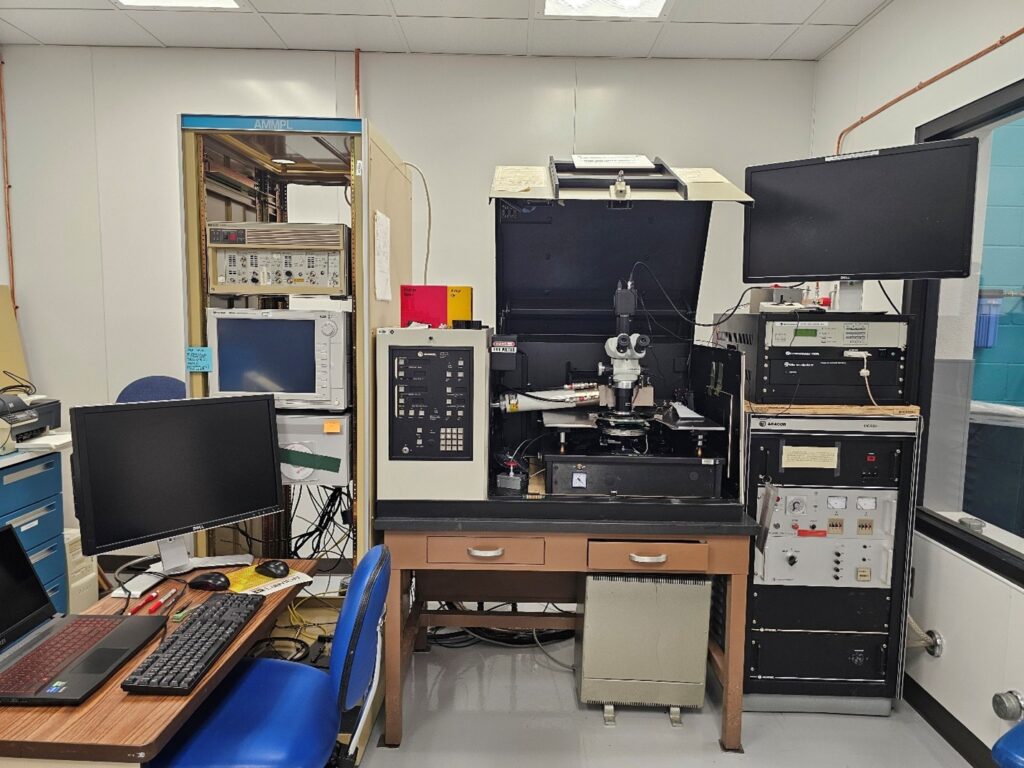
The ARACOR X-ray test system is used to investigate total ionizing dose effects on individual microelectronic devices. This system produces X-rays with energies that have a max range of 60 keV with peak energies at 10 keV and dose rates ranging from 0.1 to 30 krad (SiO2)/min. The system is capable to accommodating an 8” wafer for X-ray characterization of fabricated die or packaged devices with lids removed. Capable of utilizing a probe card to probe and bias up to 48 contacts concurrently.
- Total Dose Simulator
- 10 to 60 keV spectrum, peak 10 keV
- 0.1 to 30 krad (SiO2)/min
Low Energy X-Ray (LEXR)
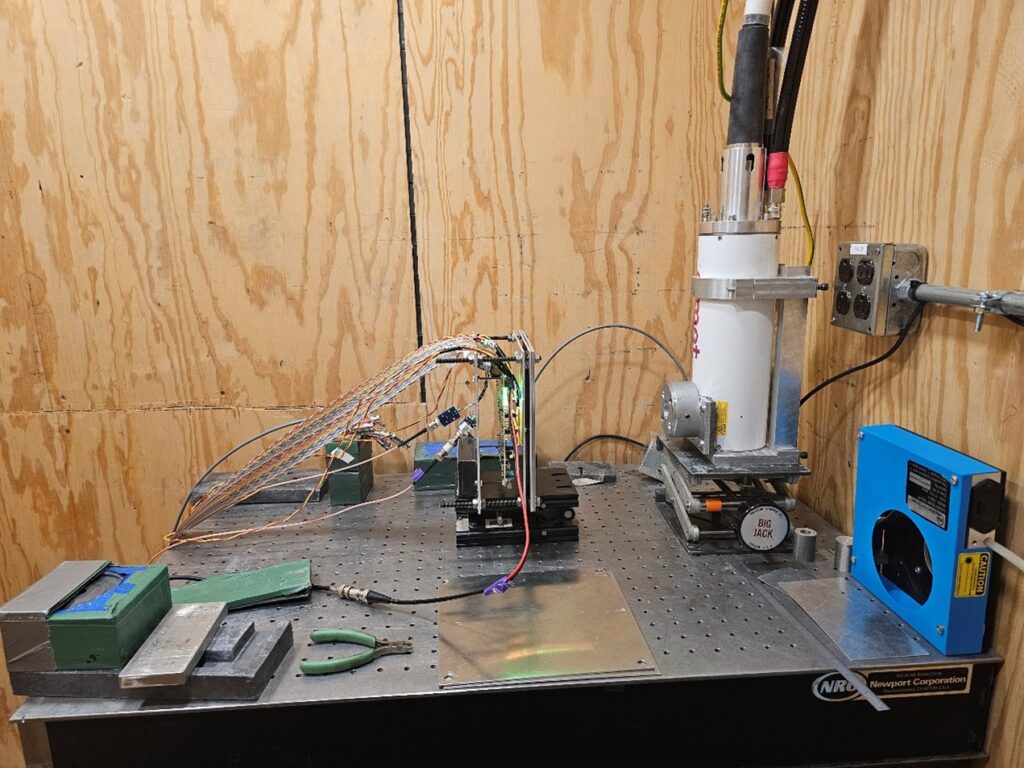
The Low Energy X-ray source is a Comet MXR-160/22 constant potential X-ray system which produces X-rays with energies that have a max range of 10 keV to 160 keV and peaks at 10 keV and 60 keV depending on the applied voltage. This source can produce a total ionizing dose rate of 360 krad (SiO2)/min. Exposure area is a 1.84 cm diameter at 10 cm from the X-ray tube. The distance from the tube can be varied up to 1 m to control dose rate. The X-ray tube current is variable in order to control dose rate, and the total energy deposited per unit area. This source is capable of providing in-situ experimentation.
- High Total Dose Simulator
- 10 to 160 keV spectrum, peaks 10 and 60 keV(adjustable)
- 360 krad(SiO2)/min (max)
- 30 ft2 Test Cell
Flash X-Ray (FXR)
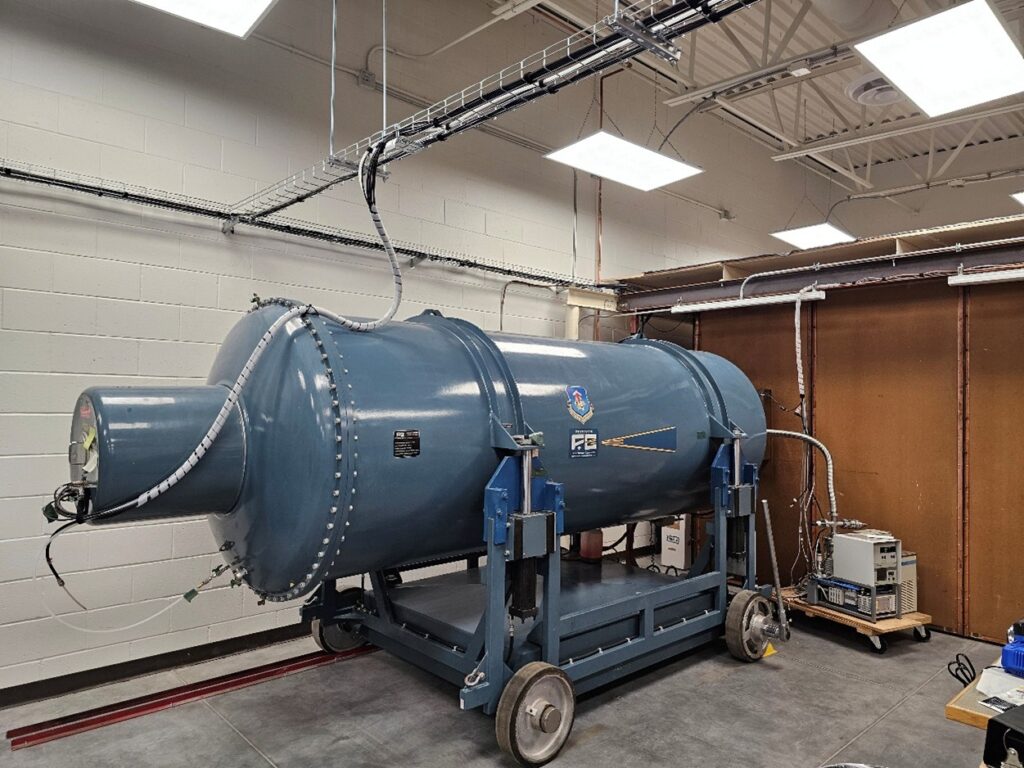
The Flash X-ray source is a Febetron 705 machine which produces prompt dose exposures simulating nuclear weapons environments. This facility is capable of producing a 20 nanosecond pulse X-ray. The average 2.1 MeV of the X-rays produced in this facility provides a dose rate output from between 1x10⁷ to 2x10¹¹ rad (Si)/sec. A 70 ft2. screen room is available for housing experiments in order to minimize the effects of EMP produced by the Febetron 705. To obtain higher dose rates, experiments may be performed in open air directly in front of the Febetron 705.
- High Dose Simulator
- X-ray Mode (Prompt dose)
- 1x10⁷ to 2x10¹¹ rad(Si)/sec X-ray